


Office Move Checklist: How Businesses Can Plan a Smooth Office Relocation
Posted by Danielle Singer on Mar 6th 2026
Office Move Checklist: How Businesses Can Plan a Smooth Office Relocation
Moving an office is more than a change of address. It is a major operational project that affects people, technology, timelines, vendors, and the physical workspace itself.
Without a plan, office moves can create downtime, confusion, unexpected costs, and last-minute furniture issues. With the right checklist, they become far more manageable.
Whether a business is relocating across St. Louis, expanding into a larger space, downsizing, or reworking an existing layout, planning ahead makes the entire process smoother.
1. Start Earlier Than You Think
One of the most common mistakes in an office move is underestimating how many decisions must be made before moving day.
Furniture planning, delivery timing, installation scheduling, IT coordination, signage updates, and employee communication all take longer than most teams expect.
Start by:
• Assigning a project lead
• Creating a timeline with major milestones
• Setting a target move date
• Identifying vendors involved in the move
Even if the plan evolves, having one central owner and one working checklist creates structure from the beginning.
2. Decide What Is Moving, What Is Staying, and What Needs to Go
Before ordering anything new or scheduling movers, take inventory of your existing office furniture and equipment.
Review:
• Workstations and cubicles
• Desks and private office furniture
• Office chairs and seating
• Conference tables
• Filing cabinets and storage
• Reception furniture and collaborative areas
Identify:
• What still works well
• What does not fit the new space
• What can be reconfigured
• What should be removed or replaced
An office move is often the best opportunity to avoid bringing yesterday’s problems into tomorrow’s workspace.
3. Confirm the New Space Plan Before Final Furniture Decisions
Furniture decisions should support the layout, not happen separately from it.
Before finalizing what will be moved or purchased, confirm how the new office will function.
Consider:
• Headcount and future growth
• Private offices and workstation needs
• Conference rooms and meeting spaces
• Reception and client areas
• Storage requirements
• Collaboration areas
• Traffic flow throughout the office
A thoughtful space plan helps avoid ordering furniture that does not fit the layout or the way teams actually work.
4. Build the Furniture Strategy Early
Office moves often reveal that furniture needs are more complicated than expected.
Some businesses need all new furniture. Others benefit from a blended strategy that combines existing furniture, pre-owned inventory, refurbished pieces, and selected new products where design impact matters most.
Many organizations balance cost, speed, and design by combining:
• New furniture for key spaces like reception or conference rooms
• Pre-owned furniture for workstations and support areas
• Refurbished furniture for updated appearance at lower cost
• Reconfigured existing furniture where it still works well
A mixed strategy often allows organizations to balance cost, speed, and overall design quality.
5. Coordinate Delivery and Installation
A move does not succeed simply because the furniture arrives.
The order of operations matters.
Delivery, installation, flooring, finishing work, signage, technology setup, and punch-list items all need to be coordinated so teams are not working over one another or delaying occupancy.
Planning ahead helps ensure:
• Furniture arrives on schedule
• Installation happens efficiently
• Workspaces are ready when employees arrive
Working with an experienced team can simplify this process and reduce coordination challenges.
6. Plan for Furniture Removal and Decommissioning
The old office still needs a plan.
Many moves involve:
• Furniture removal
• Decommissioning requirements from landlords
• Liquidation or resale of excess furniture
• Donation coordination
• Clearing the space for lease turnover
If this piece is left until the last minute, it can create unnecessary stress and additional cost.
Planning decommissioning early prevents last-minute surprises.
7. Communicate the Plan Internally
Employees do better with clarity.
Make sure team members know:
• The move timeline
• What they are responsible for packing
• What furniture will change
• When they will move into the new space
Even a simple communication plan helps reduce confusion and keeps the move from feeling more chaotic than it needs to be.
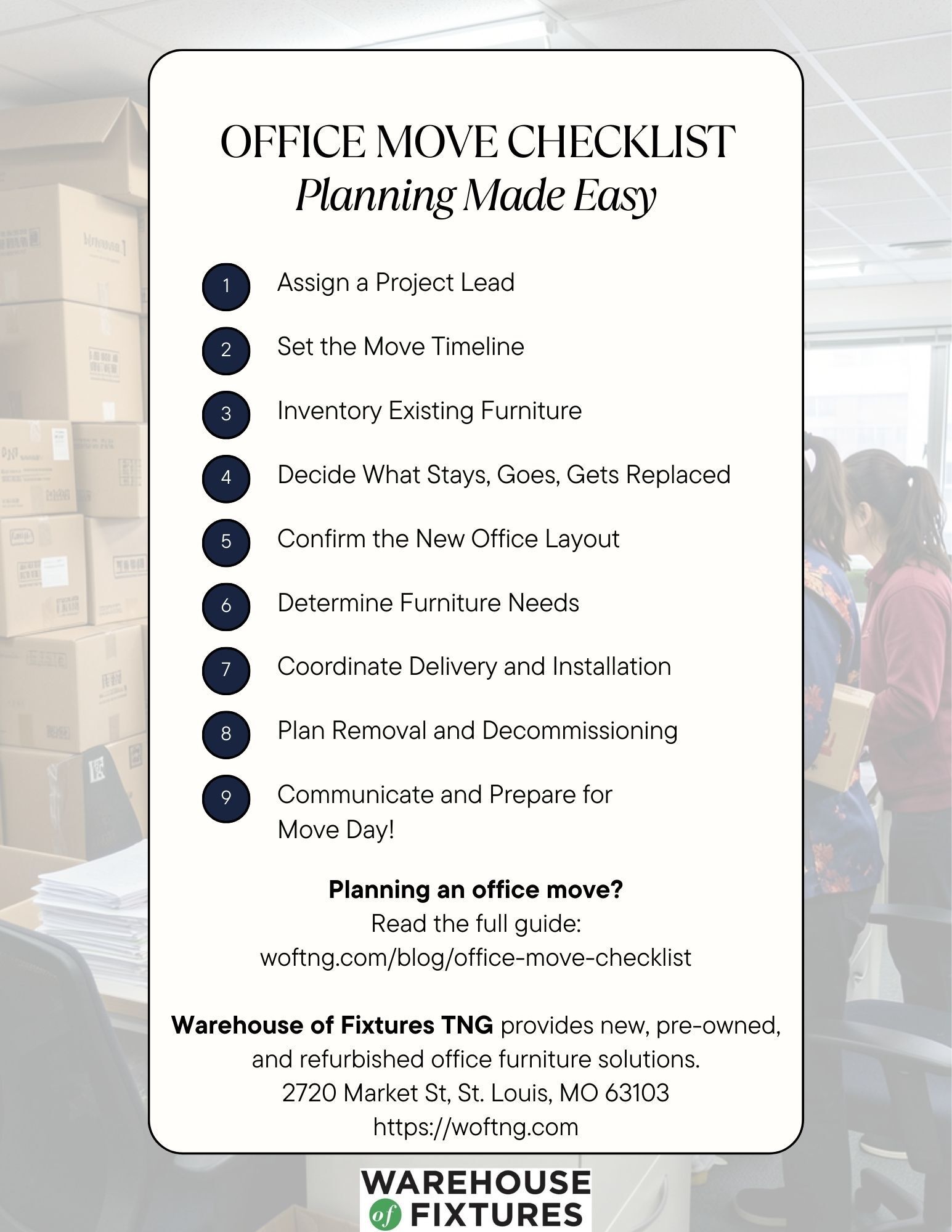
A Simple Office Move Checklist
Use this checklist to stay organized:
• Assign a project lead
• Set the move timeline and occupancy date
• Inventory existing furniture and equipment
• Decide what will move, what will be replaced, and what will be removed
• Confirm the new space plan and layout
• Determine furniture needs: new, pre-owned, refurbished, or existing
• Coordinate delivery and installation schedules
• Plan furniture removal and decommissioning for the old space
• Communicate the move plan internally
• Prepare for post-move adjustments
Want a prinable version?
Download the Office Move Checklist (PDF)
Office Moves Go Better With the Right Plan
A successful office move is not just about transporting furniture. It is about making thoughtful decisions early enough to avoid disruption later.
For many businesses, the best move plan includes a combination of:
• Space planning
• Furniture strategy
• Delivery coordination
• Installation support
• Reconfiguration services
• Decommissioning and removal
Businesses planning an office move often start by reviewing their workspace and furniture strategy.
Learn more about office furniture solutions at
woftng.com/
Or explore used office furniture options at
woftng.com/used-office-furniture-in-st-louis
About the Author
Danielle Singer is Chief Operating Officer of Warehouse of Fixtures TNG, a St. Louis-based office furniture provider offering new, pre-owned, refurbished, rental, and financing solutions. She focuses on helping organizations align workplace design, functionality, and budget through flexible office furniture strategies.